📜 “Do not feel lonely, the entire universe is inside you. Stop acting so small. You are the universe in ecstatic motion. Set your life on fire. Seek those who fan your flames.” — Jalal Din ar-Rumi
9.1 The April 2024 Attack: Weapon-by-Weapon Breakdown
Iran’s True Promise I attack was the most complex combined aerial assault in military history. Understanding its composition reveals the sophistication of Iran’s saturation doctrine:
Weapon
Quantity
Speed
Warhead
Flight Time to Israel
Interception Layer
Shahed-136 (propeller)
~170
185 km/h
40–50 kg
~9 hours
Fighter jets; guns (easiest to intercept)
Shahed-238 (jet-powered)
350+ km/h
~40 kg
~5 hours
Fighter jets; short-range SAMs
Cruise missiles
30+
800–900 km/h
~450 kg
~2–3 hours
David’s Sling; fighter jets
Ballistic missiles (Emad, Ghadr, Kheibar Shekan)
120+
Mach 5–10
500–1,000 kg
~12 minutes
Arrow 2/3; THAAD (some intercepted in space)
Hezbollah BM-21 Grad rockets
Dozens
~500 m/s
~20 kg
Seconds
Iron Dome
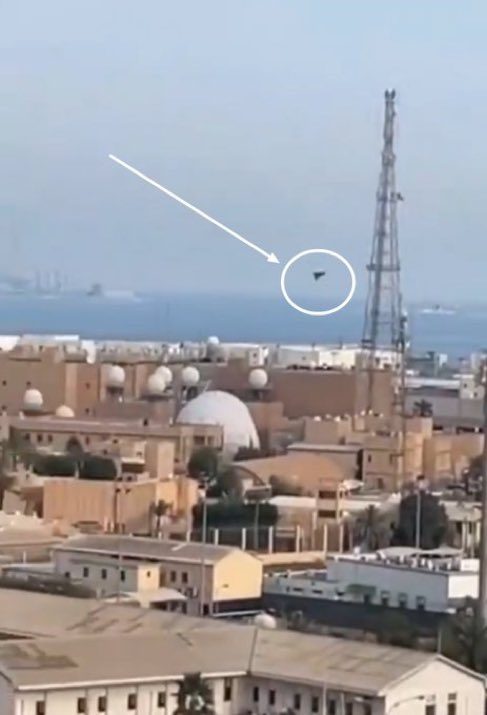
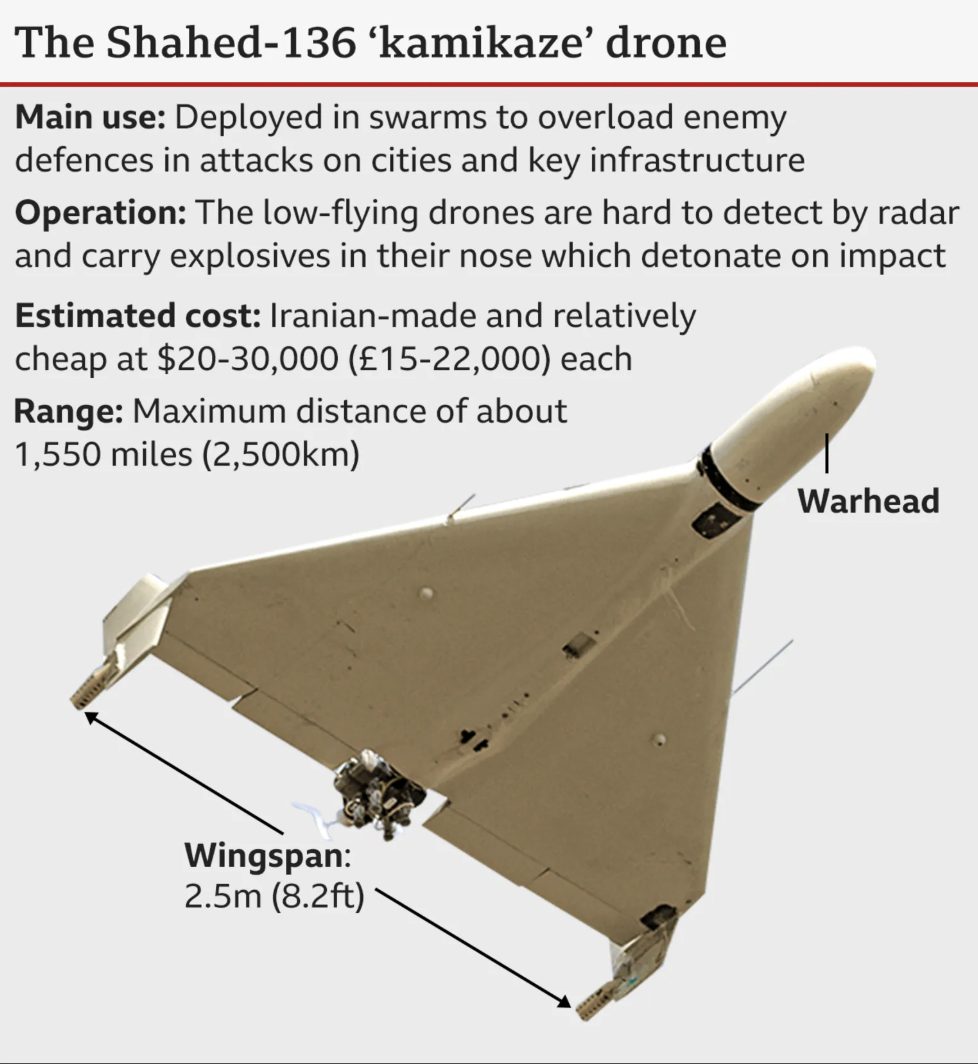
The tactical layering was deliberate. Slow Shahed drones launched first, requiring 9+ hours to reach Israel, giving the defense maximum warning but also maximum time to prepare and expend resources. Faster jet-powered Shaheds followed. Cruise missiles arrived in the middle timeline. Ballistic missiles, traveling at hypersonic speeds with only 12 minutes of flight time, arrived last—when defenses were ideally already partially depleted from engaging the slower waves. Hezbollah’s coordinated rocket barrage from Lebanon added a simultaneous multi-axis threat.
The defense required multinational coordination on a scale never before attempted in real-time combat. The Combined Air Operations Center at Al Udeid Air Base in Qatar coordinated assets from six nations across a theater stretching from the Persian Gulf to the Mediterranean. U.S. F-15E fighters intercepted drones over Iraq and Jordan. Navy destroyers engaged ballistic missiles in the Arabian Sea. British and French aircraft and naval assets contributed. Jordan intercepted objects in its own airspace. Saudi Arabia and UAE shared radar tracking intelligence. The entire operation was executed in approximately six hours.
9.2 The Interceptor Stockpile Crisis: Detailed Analysis
The sustainability problem exposed by the Iran-Israel conflict is perhaps the most consequential finding for global defense planning. The following analysis breaks down the interceptor economics:
Interceptor
Unit Cost
Annual U.S. Production
Stockpile (Est.)
Consumed in June 2025 War
Years to Replace
THAAD
$12M+
~37 planned (FY2026)
~650 procured since 2010
~25% of stockpile
4–5 years at max production
SM-6
$3.9M
~80/year
~500 (classified)
Significant (classified)
Multiple years
SM-2
$2.1M
Production line restarting
~1,000+
120 (Red Sea alone)
1–2 years
Patriot PAC-3 MSE
$4M+
~500/year
~2,000+
Hundreds (Gulf states + Israel)
1–2 years
Arrow 3
$2–3M
~50/year (Israel)
~200+
Dozens
1+ years
David’s Sling (Stunner)
$1M
~100/year (Israel)
~500+
Dozens
6–12 months
Iron Dome (Tamir)
$50K
~1,000+/year (Israel)
~10,000+
Thousands
6–12 months
The arithmetic is devastating. Iran produces approximately 10,000 Shahed drones per month. The United States produces approximately 37 THAAD interceptors per year. Iran produces more attack drones in a single day than the U.S. produces THAAD interceptors in a year. Even Iron Dome Tamir interceptors, the cheapest Western system at $50,000 each, cost more than many Iranian drones. And while Israel’s production capacity for Iron Dome interceptors is substantial, the system was designed for short-range rocket defense, not sustained barrages of long-range drones and ballistic missiles.
The June 2025 war proved that this was not a theoretical concern. The United States blew through several years of THAAD production and approximately a quarter of its total procured inventory in less than two weeks. At the planned FY2026 procurement rate of 37 interceptors, replacing those expended rounds would take 4–5 years of production. During those years, the stockpile would be depleted, reducing America’s ability to respond to a second simultaneous crisis—whether on the Korean peninsula, in the Taiwan Strait, or elsewhere.
9.3 The LUCAS Revolution: From Captured Shahed 136 drone to Combat Weapon
The LUCAS program’s timeline represents both an achievement and a cautionary tale about how slowly even “fast” Western programs move compared to adversaries:
Date
Milestone
Significance
~2022–2023
U.S. forces capture Shahed-136 in field
Intelligence acquisition; reverse-engineering begins
2023–2024
SpektreWorks develops FLM-136 (target drone version)
Training/threat emulation variant; establishes manufacturing capability
Jul 2025
LUCAS unveiled at Pentagon event (Hegseth showcase)
18 prototype drones from 12 companies displayed; political commitment
Sep 2025
SpektreWorks receives $30M APFIT contract
Procurement funding for operational transition
Nov 23, 2025
LUCAS drones positioned at Middle East base
Task Force Scorpion Strike established
Dec 3, 2025
CENTCOM deploys squadron to Middle East
First dedicated one-way attack drone squadron in U.S. history
Dec 16, 2025
First sea launch from USS Santa Barbara (LCS-32)
Demonstrates naval launch capability
Jan 3, 2026
Reportedly used in Operation Absolute Resolve (Venezuela)
First unofficial combat use
Feb 28, 2026
First confirmed combat use against Iran
Operation Epic Fury; CENTCOM confirms strikes on Iranian targets
Mar 17, 2026
Pentagon announces mass production plans
“Indispensable” designation; scaling up manufacturing
The networking capability is the qualitative differentiator. A Shahed swarm saturates through pre-programmed volume—a brute-force approach relying on numbers. LUCAS is designed so drones can coordinate in flight, adapting to which targets are defended and where sensor gaps exist. They serve as MUSIC mesh network nodes, maintaining communications under jamming. Defense analysts predict the first documented autonomous mid-mission targeting redistribution by September 2026—when confirmed, it will shift the lethal autonomous weapons debate from academic to urgent.
KEY INSIGHT: The Iran-Israel conflict consumed approximately 25% of America’s THAAD stockpile in two weeks. At FY2026 procurement rates (37/year), replacement requires 4–5 years. Iran produces more Shaheds in one day than the U.S. produces THAAD interceptors in an entire year. The mathematics of active defense alone is catastrophically unsustainable.