3.1 The Kill-Ratio Revolution: Detailed Cost Analysis
Opening Scene
The tank crew hears nothing.
No jet.
No missile warning.
No incoming artillery.
Just silence.
Inside the armored shell, they trust the machine—layers of steel, decades of doctrine, billions of dollars of engineering distilled into protection.
Above them, something small adjusts its angle.
A camera locks.
A signal flickers.
Then it disappears.
The drone dives.
The explosion is brief.
The silence returns and permanently.
And the equation of war has changed permanently.
The financial arithmetic of drone warfare represents the most significant disruption in military economics since the introduction of gunpowder rendered medieval castles obsolete. To fully understand the scale of this disruption, consider the following comprehensive cost comparison across weapon categories:
Weapon System
Unit Cost
Target It Can Destroy
Target Value
Kill Ratio (Attacker:Defender)
Basic FPV drone (grenade)
$300–500
Infantry position, light vehicle
$50K–200K
1:100–400
FPV drone (shaped charge)
$1,000–2,000
T-72 tank, BMP-2 IFV
$1.5M–3M
1:750–3,000
FPV drone (thermobaric)
$2,000–5,000
Fortified bunker, building
$500K–2M
1:100–400
Shahed-136 loitering munition
$20K–50K
Radar, SAM system, warehouse
$5M–50M
1:100–1,000
Ukrainian maritime drone (Sea Baby)
$100K–250K
Warship (corvette–cruiser)
$100M–1B
1:400–4,000
Sub Sea Baby (underwater USV)
Est. $200K–500K
Submarine at pier
$300M+
1:600–1,500
LUCAS (U.S.)
$35,000
Radar, missile launcher, factory
$1M–50M
1:30–1,400
Interceptor drone (Ukrainian)
$1,000–5,000
Incoming Shahed drone
$20K–50K
1:4–50 (cost-favorable defense)
The table reveals a consistent pattern: across every category, the attacking drone costs one to three orders of magnitude less than its target. This is not a temporary price advantage that will be corrected by market forces or technological development. It reflects a fundamental structural change in the economics of warfare. The drone is cheap because it is simple: a motor, a battery, a camera, a flight controller, and an explosive charge. The target is expensive because it is complex: engineered for survivability, performance, and longevity across decades of service. The attacker has embraced disposability; the defender remains committed to durability. In a war of attrition, disposability wins.
Complexity was strength. The cost was power. But, something fundamentally different has emerged: Simplicity has become lethal.
What makes this possible is not just cost—it is design philosophy.
The Old Model:
Built to survive, Built to last decades, Built to win through durability
The New Model:
Built to be lost, Built to be replaced instantly, Built to win through volumeThe attacker no longer needs perfection. They need probability . And probability scales.
3.2 The Ukrainian Production Miracle: A Month-by-Month Reconstruction
Ukraine’s drone production scaling is without precedent in military-industrial history. No nation has ever built a major weapons industry this quickly under wartime conditions. The timeline reveals how civilian-military fusion, entrepreneurial energy, and existential motivation combined to achieve what traditional procurement systems would consider impossible:
Period
Monthly Production
Workforce
Key Innovation
Constraint Overcome
Mar–Dec 2022
~4,000/month
Volunteers; hobbyists
Modified commercial DJI drones
Proving concept under fire
Jan–Jun 2023
~30,000–50,000/month
First startups forming
Purpose-built FPV frames
Scaling beyond cottage industry
Jul–Dec 2023
~70,000/month
100+ startups
Standardized warheads; training programs
Component supply chains
Jan–Jun 2024
~100,000–150,000/month
200+ startups
AI terminal guidance; fiber-optic control
Chinese export restrictions on DJI
Jul–Dec 2024
~200,000/month
300+ startups; Vyriy milestone
Fully domestic components; 13-inch frames
Supply chain independence
Jan–Jun 2025
200,000+/month
Unmanned Systems Forces operational
Interceptor drones; swarm experiments
Doctrine integration
Jul–Dec 2025
200,000+/month
International co-production begins
Mini cruise missiles; maritime expansion
European co-production scaling
The Vyriy milestone in March 2025 deserves particular attention: a batch of 1,000 drones built entirely from domestically produced components—flight controllers, radios, cameras, and engines. This achievement eliminated Ukraine’s vulnerability to Chinese export restrictions that had threatened to cripple drone production. When China blocked DJI Mavic exports to Ukraine, it created a crisis that forced Ukrainian manufacturers to develop their own supply chains. The result was a stronger, more resilient production base than the one that preceded the restriction. Adversity, in this case, produced antifragility.
Ukraine demonstrated something unprecedented: From near-zero industrial capacity, it built a system capable of producing millions of drones annually.
Not through: Centralized factories, Traditional defense giantsBut through: Startups, Workshops, Distributed innovationThis is not just industrial scaling… It is an industrial mutation.
A shift from: “Few, expensive, perfect systems” to: “Many, cheap, adaptable systems” . And once this model exists… It spreads.
3.3 The Armor Casualty Register: What the Data Shows
The Oryx open-source intelligence project, which documents equipment losses through photographic or video evidence, provides the most rigorous publicly available dataset on equipment destruction in the Ukraine war. By December 2025, Oryx had visually confirmed:
Category
Russian Losses (Confirmed)
Ukrainian Losses (Confirmed)
Ratio
Notes
Main Battle Tanks
3,000+ (DIA); ~3,500 (Oryx extrapolated)
~2,400
1.3–1.5:1
Includes T-72, T-80, T-90 variants; Russia drawing from Soviet-era reserves
Armored Fighting Vehicles
1,149 (since Jan 2024 alone, CSIS)
~800
~1.4:1
BTR, BMP series; high drone vulnerability
Infantry Fighting Vehicles
3,098 (since Jan 2024, CSIS)
~1,200
~2.6:1
BMP-1/2/3; extremely vulnerable to top-attack FPV
Self-Propelled Artillery
300+ (since Jan 2024, CSIS)
~150
~2:1
2S19 Msta, 2S3 Akatsiya; targeted by long-range FPV
Towed Artillery
~1,200
~600
~2:1
D-30, 2A65; increasingly targeted by drone-corrected fire
MLRS Systems
~400
~200
~2:1
BM-21 Grad; high-value counter-battery targets
Aircraft/Helicopters
250+ (DIA); 353 (Oryx)
1.3–1.8:1
Includes 11–12 strategic bombers (June 2025)
Naval Vessels
26+ damaged/destroyed (UK MOD)
1 (reconnaissance warship, Aug 2025)
26:1
Including cruiser Moskva, submarine, landing ships
Air Defense Systems
~300+
~200
~1.5:1
S-300, Buk, Tor; high-priority drone targets
Total Equipment
23,715 (Oryx, Dec 2025)
10,869
2.2:1
Russia losing equipment ~2.2x faster than Ukraine
The U.S. Defense Intelligence Agency’s May 2025 estimate is particularly authoritative: Russia lost at least 10,000 ground combat vehicles including more than 3,000 tanks, nearly 250 aircraft and helicopters, and more than 10 naval vessels since the war began. CSIS analysis found equipment loss ratios varying between 2:1 and 5:1 in Ukraine’s favor—meaning Russia is paying two to five times the equipment price for every meter of territory gained.
To sustain these losses, Russia has been forced to draw from Soviet-era reserve stocks. Satellite imagery of Russian storage facilities shows steadily declining inventories of older tank models (T-62, T-55) being refurbished and sent to the front. Analysts estimate that at current loss rates, Russia’s reserve stocks of usable tanks could be exhausted within 18–24 months, forcing increasingly desperate improvisations or a fundamental change in battlefield approach.
Every countermeasure—cages, jammers, armor—creates a paradox: More weight, Less mobility, Reduced effectiveness And still… No guarantee of survival.
The defender is trapped in a losing equation: Spend more to defend something that costs less to destroy.
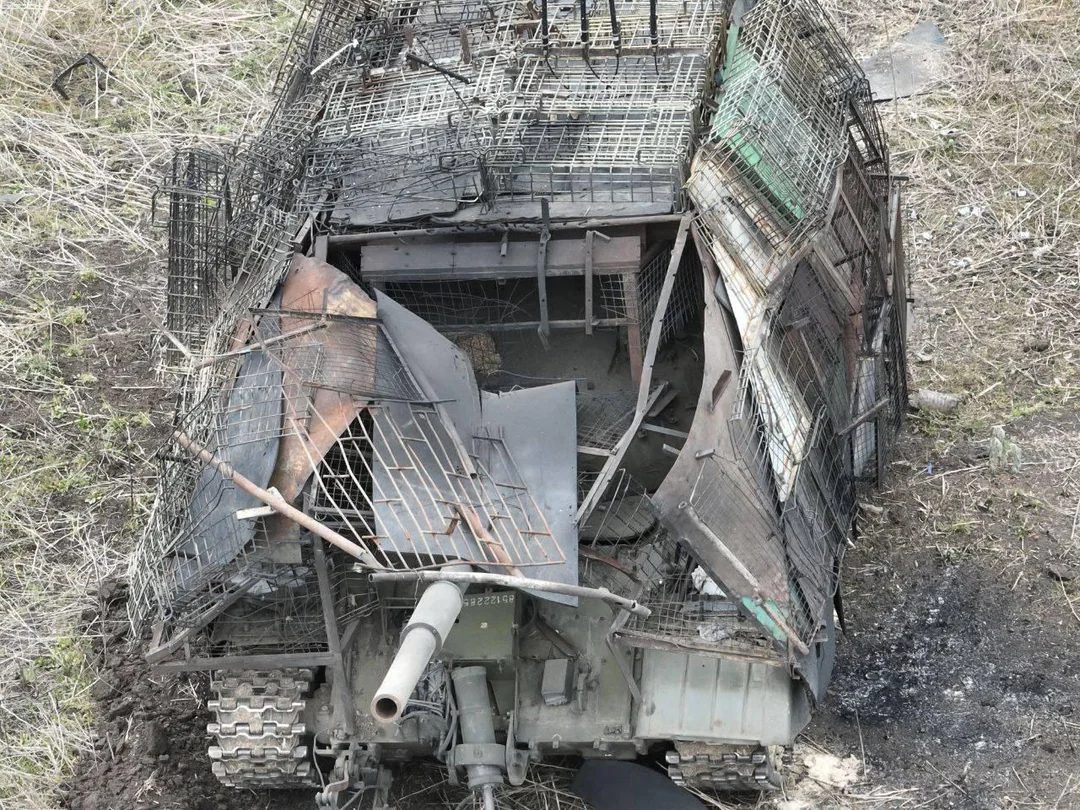
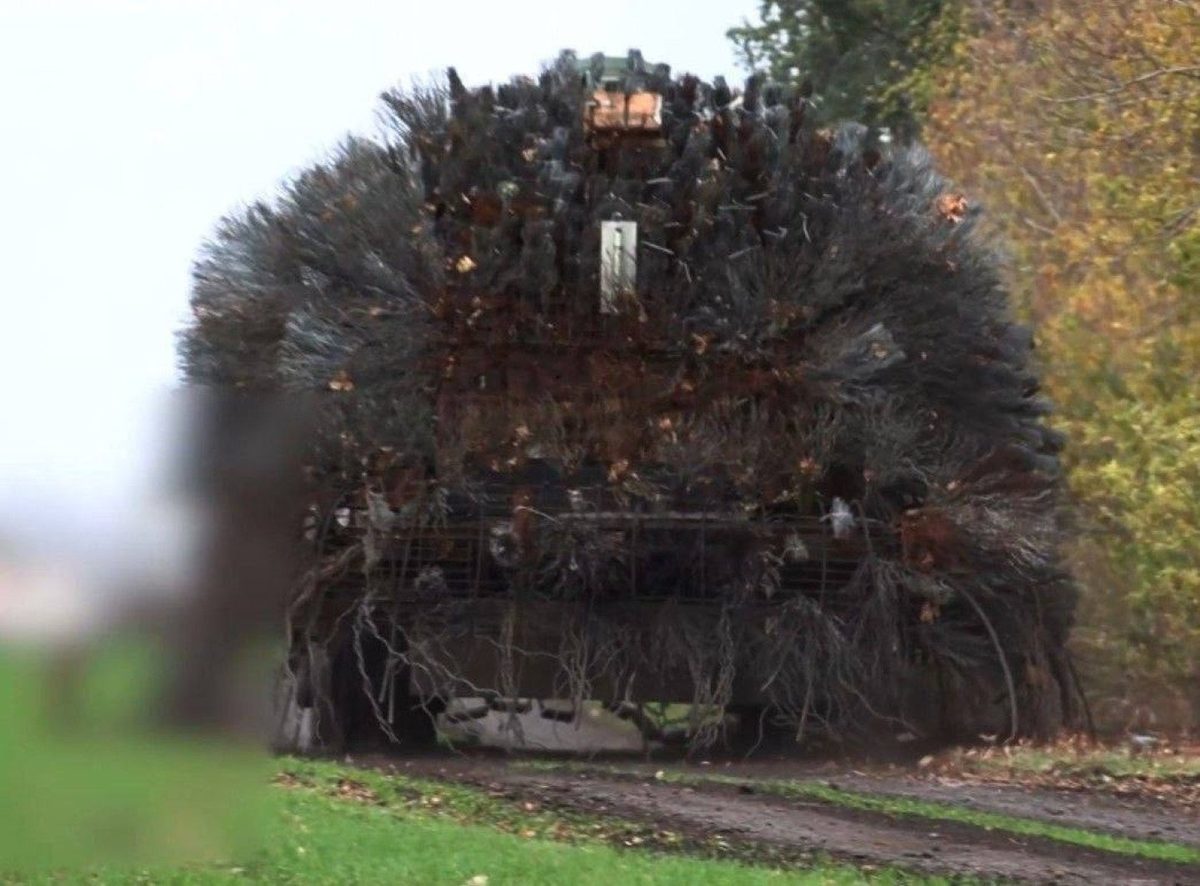
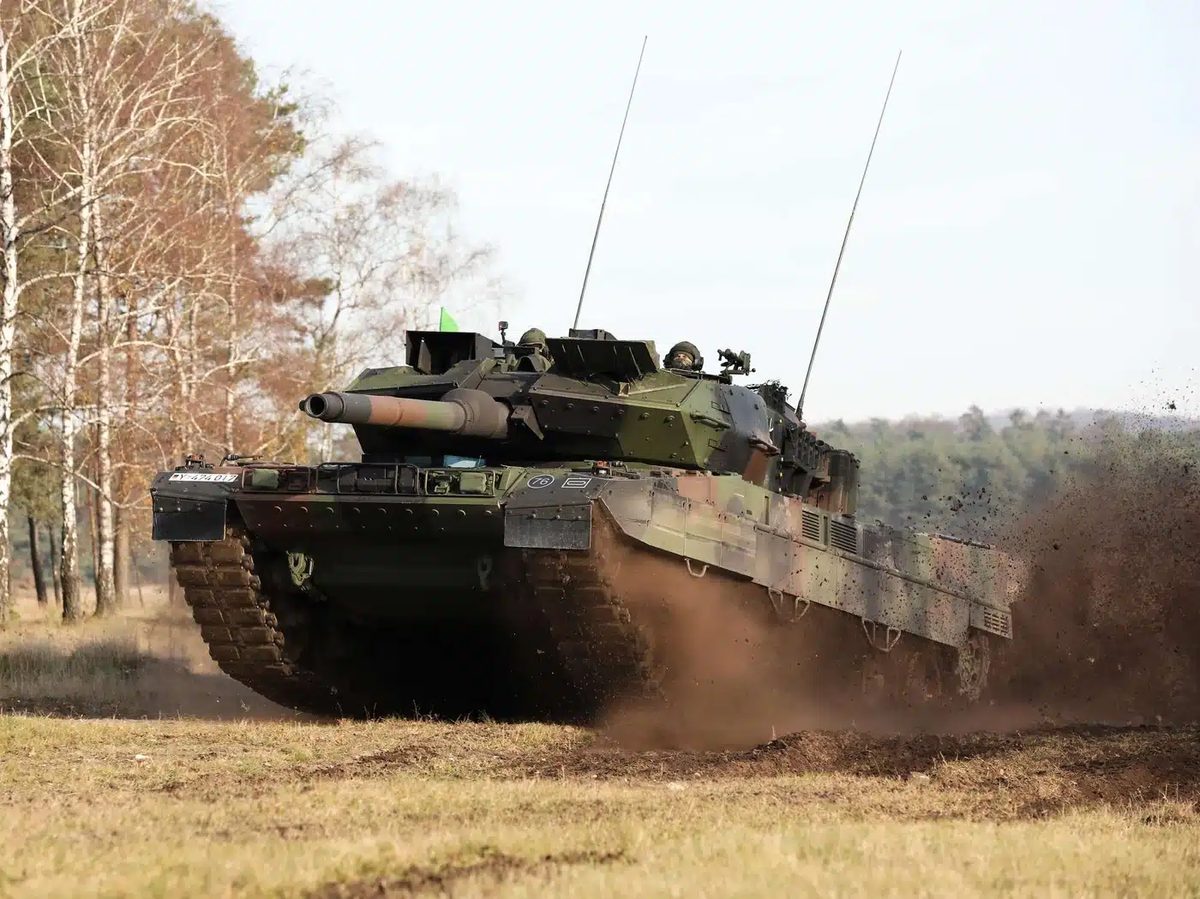
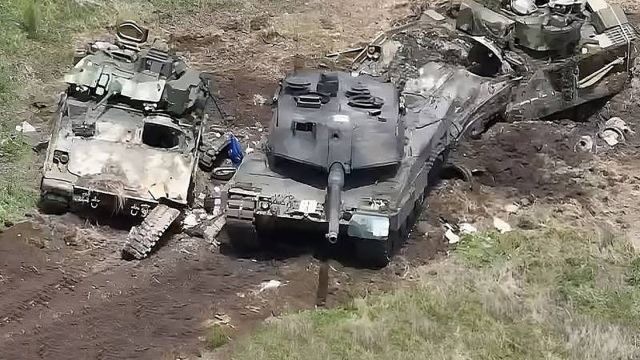
In the other part, Rheinmetall Leopard advanced tank commercial ads, promising power, strength, protection. With a price tag : 2A7+: €13–15 million (FY 2014) and 2A8: €29 million (2023), was transformed from left picture promise to the right side picture reality. The tank era is definitely over !
3.4 The Survivability Crisis: Detailed Tactical Analysis
The FPV drone attacks from above—the least protected aspect of most armored vehicles. The top armor of a T-72 tank is approximately 20–40mm of steel, compared to 500–800mm equivalent on the frontal arc. A shaped-charge warhead on an FPV drone can penetrate 100–200mm of rolled homogeneous armor—more than sufficient for a top-attack engagement. The physics of the engagement are simple: the drone need only reach the target’s upper surface to achieve a kill.
Russian countermeasures have evolved through several generations, none fully successful:
Countermeasure
Description
Effectiveness
Limitation
Cope cages (1st gen)
Welded steel mesh over turret
10–20% reduction in drone kills
Heavy; obstructs visibility; defeated by oblique attacks
Cope cages (2nd gen, “turtle”)
Full body enclosure with angled plates
30–40% estimated
Extremely heavy; limits gun depression; crew access impaired
ERA tiles (top-mounted)
Explosive reactive armor on roof
Moderate against shaped charges
Weight; blast danger to dismounts; limited coverage
Vehicle-mounted EW jammers
GPS/radio frequency disruption
High vs. radio-controlled drones
Ineffective vs. fiber-optic and AI-guided; power-hungry
Camouflage nets / thermal blankets
Concealment from visual/IR detection
Low–moderate
Slows operations; ineffective once vehicle is moving
Active Protection Systems
Interceptor projectiles (Trophy, Arena)
Designed for missiles, not drones
Wrong engagement geometry; cost per intercept high
Drone detection radar
Small radar units on vehicles
Early warning only
Cannot engage; adds signature; requires integration
The fundamental problem is that all passive defenses impose costs on the defended vehicle—weight, visibility restrictions, operational limitations—while the attacker’s cost remains negligible. A $500 drone that forces the defender to add $50,000 in armor modifications, reduce combat effectiveness by 20 percent, and still achieve only partial protection represents a losing trade for the defender regardless of whether any individual attack succeeds.
3.5 The Infantry Transformation : The Deeper Shift
📜 “You see the fortress as strength, yet its height invites the fall.” — Khalil Gibran
What was once protection, becomes visibility. What was once strength becomes vulnerability. And in that inversion, a new logic of war is born.
As machines become vulnerable, individuals become powerful. This creates a new kind of soldier: Part pilot, Part analyst, Part hunter . All operating not in formations, but in networks.
And with that comes a new psychological reality:
No movement is safe.
No position is hidden.
No moment is unwatched.
War becomes: Continuous exposure.
This chapter is not about drones. The most important question is no longer: Who has the strongest army? But: Who can adapt the fastest at scale?
The drone revolution has transformed infantry warfare as profoundly as armored warfare. In Ukraine, individual soldiers and small units operate the most lethal weapons on the battlefield. A two-person FPV drone team—one pilot wearing goggles, one observer with binoculars—can destroy targets that previously required airstrike requests through battalion command channels, fire missions from divisional artillery, or dedicated anti-tank teams with $100,000+ guided missiles.
The psychological dimension is immense. Soldiers on both sides describe the constant overhead drone presence as the defining feature of frontline experience. Captured Russian soldiers report they never saw Ukrainian soldiers directly—only drones. Any movement, any vehicle, any gathering of personnel is potentially under observation and subject to immediate precision attack. This creates a battlefield characterized by extreme dispersal, nocturnal operations, and a pervasive sense of vulnerability that affects morale, unit cohesion, and willingness to advance.
Training requirements have expanded dramatically. Traditional infantry training emphasized marksmanship, physical fitness, fieldcraft, and small-unit tactics. Modern infantry must add: FPV drone piloting skills (both attack and ISR); counter-drone awareness and evasion; electronic warfare literacy (understanding jamming, spoofing, and frequency management); and real-time integration of drone intelligence into tactical decisions. Ukraine has had to retrain its entire infantry force while fighting—a feat of institutional adaptation few peacetime militaries have replicated.
The logistical demands are also transformed. A frontline infantry company that previously consumed ammunition, food, water, and medical supplies now additionally requires: drone airframes (dozens per day at high operational tempo); batteries (limited lifespan, requiring constant resupply); replacement parts (propellers, cameras, flight controllers); explosive payloads; and trained operators to replace casualties. The supply chain for a drone-era infantry unit is fundamentally different from its predecessor.
KEY INSIGHT: Russia has lost equipment at ratios of 2:1 to 5:1 compared to Ukraine since January 2024 (CSIS), yet gained less than 1.5% of Ukrainian territory. The rate of advance averaged 15–70 meters per day—slower than WWI’s Battle of the Somme. This is the arithmetic of drone-era attrition: massive cost for minimal gain.